Meta Leverages Legacy DDR4 Memory to Combat Rising DDR5 Costs with Custom ASIC
The escalating prices of DDR5 memory, driven by overwhelming demand, pose significant challenges for tech companies striving to keep their systems competitive. The rapid evolution in memory technology, coupled with increased workloads, has created a landscape where securing affordable, high-performance memory solutions is paramount. In response to these pressures, Meta is creatively reclaiming DDR4 memory from outdated servers and repurposing it for its latest machines. This isn’t just a cost-saving measure; it’s an attempt to enhance performance flexibility without over-relying on DDR5, which has skyrocketed in price recently. They’re utilizing a proprietary chip known as the Vistara ASIC, enabling compatibility between older memory modules and modern servers powered by AMD's EPYC 'Turin' processors, which were primarily designed for DDR5 memory. This strategic pivot raises important questions about sustainability, cost, and the future trajectory of memory technologies.
Custom Chip Design Links DDR4 Memory with Modern Architecture
The Vistara ASIC represents Meta's first foray into application-specific integrated circuits specifically engineered to bridge the gap between outdated DDR4 memory and the demands of modern server environments. This custom chip operates as a CXL 2.0 Type-3 memory expander, interfacing through a PCIe 5.0 x16 connection. This dual compatibility is critical: it not only allows the repurposing of DDR4 modules but also significantly extends the life cycle of existing hardware. By supporting two independent 72-bit DDR4 memory channels, the Vistara ASIC can handle a maximum capacity of 256 GB when paired with 64 GB DIMMs. Currently, Meta is deploying 128 GB per ASIC utilizing 32 GB DDR4 modules sourced from decommissioned servers, demonstrating effective resource utilization in an industry often criticized for its waste.
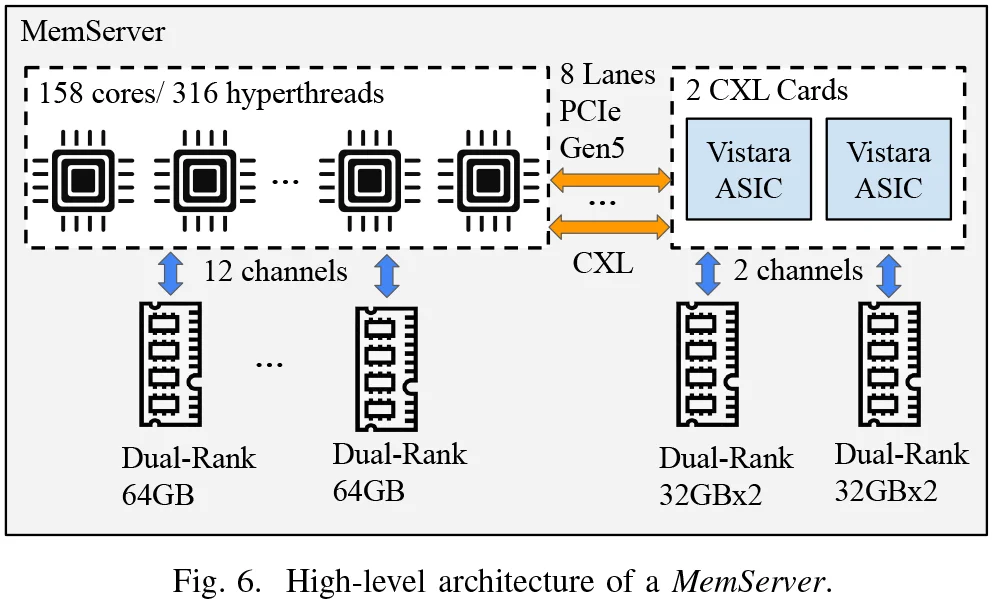
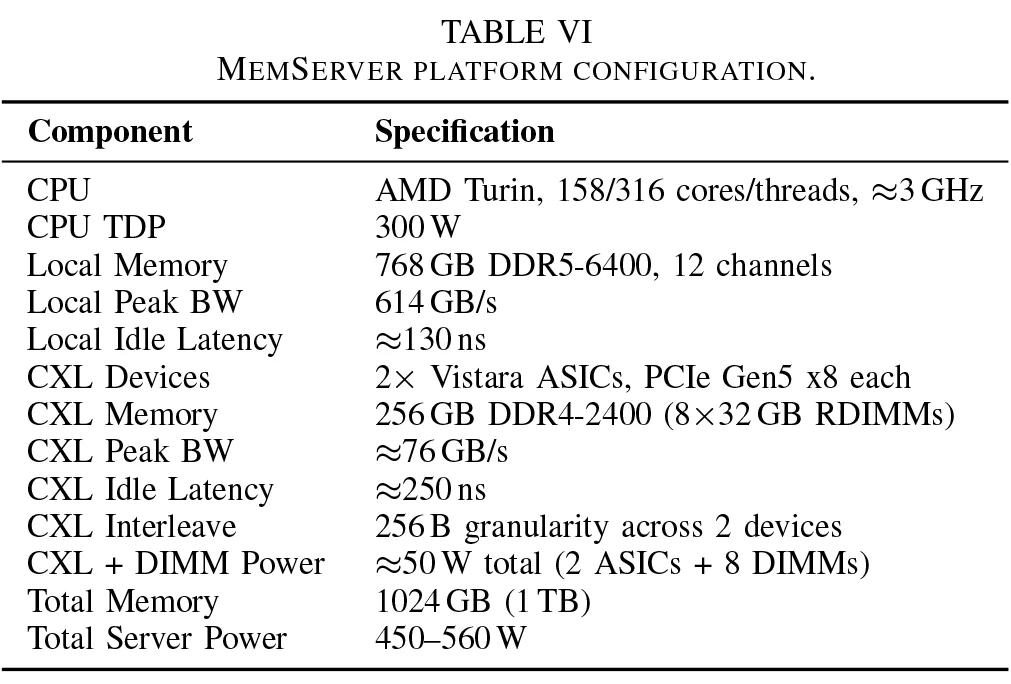
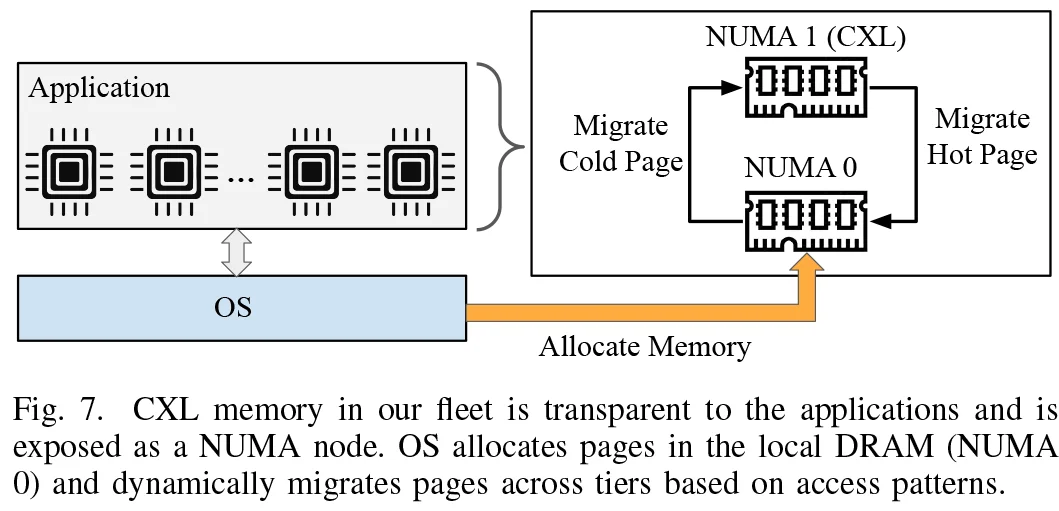
In coordinating the operation of Meta's MemServer platform, Vistara ASICs interface with a single, powerful 158-core AMD Turin processor through PCIe 5.0 x8 links. This architecture skillfully combines 768 GB of high-speed DDR5-6400 local memory with an attached 256 GB of slower DDR4-2400, pushing total memory capacity past 1 TB. What this means for performance is that software can manage memory resources based on need. The platform’s software stack effectively treats CXL memory as its own NUMA node, allowing Linux to assign infrequently accessed data to the slower DDR4 memory tier, which delivers 76 GB/s of bandwidth, while keeping high-demand data in the accelerated DDR5 memory, boasting a staggering 614 GB/s bandwidth.
This tiered approach to data storage is particularly relevant for workloads requiring rapid access to critical data without sacrificing efficiency. (And this is the part most people overlook.) While storing less frequently accessed data on a slower medium might seem counterintuitive, it not only optimizes system performance but also stretches existing hardware capabilities well beyond their initially intended life span.
Vistara incorporates three RISC-V processor cores dedicated to tasks such as secure boot management, device initialization, firmware oversight, and health monitoring. By reducing protocol overhead and optimizing the memory pipeline, Meta claims it has achieved an idle round-trip latency of around 50ns. Nonetheless, such figures should be taken with caution given the complexities of real-world server performance. Advanced error-correction mechanisms and x4 chip-kill support enhance system integrity further, which is becoming increasingly important as enterprises seek reliability in data-driven environments.
Exploring Alternatives: Panmnesia's Approach
Meta’s innovative approach isn't the only solution in the market. South Korean startup Panmnesia has developed a CXL expander that offers a compelling alternative for companies struggling with memory upgrades, which primarily connect outdated DDR4 memory to newer systems relying on DDR5. CEO Myoungsoo Jung has addressed previous concerns about switch-induced latency, claiming that advancements in CXL technology have made these fears largely unfounded. Their CXL controller aims to provide scalability while minimizing latency—a significant issue for hyperscale data centers increasingly reliant on rapid data access.
The CXL protocol operates over the PCIe physical interface but has had a turbulent history, often inheriting architectural quirks from older technologies that led to inefficient latency. By redesigning the data path and optimizing for memory semantics instead of traditional PCIe characteristics, Panmnesia presents a fresh solution that might bypass these latency hurdles altogether. Their new CXL fabric switch employs Port-Based Routing, which offers performance improvements over the outdated Hierarchy-Based Routing of older CXL designs. This enhances server configuration scalability, harkening back to the demands of complex computing environments.
Panmnesia envisions its system scaling to connect as many as 64 compute nodes, addressing the needs of hyperscale data centers eager to augment memory flexibility while reducing reliance on increasingly expensive DRAM components. Their next-gen CXL technologies are on track for commercialization, with ongoing developments pushing boundaries in PCIe 6.4/CXL 3.2 solutions and forward-thinking advancements for PCIe 7.0/CXL 4.0.
Implications of Memory Technology Evolution
The innovative strategies employed by both Meta and Panmnesia showcase more than just technological advancements. They embody a vital shift in how the tech industry approaches memory management and resource utilization. As DDR5 prices remain volatile, the ability to repurpose DDR4 effectively creates avenues for companies to manage expenses better while still striving for performance.
This is more significant than it looks. If other tech companies follow Meta's lead, we'll likely witness a broader shift in the industry’s standards for memory compatibility and efficiency. Imagine a future where outdated components are not simply discarded but find new life in modern architectures. If you're working in this space, these developments could change the way you think about hardware lifecycle management and sustainability in tech.
In a sector where innovation must blend with economic considerations, the implications stretch beyond cost savings to include environmental stewardship and operational resilience. Future developments in memory technology will need to balance performance with cost-effectiveness, forcing companies to evaluate not just their immediate needs but also their long-term strategies for sustainability and resource management.