HamsterOS Offers a 32-Bit GUI for Vintage PCs Packed into a Floppy Disk
The demand for retro computing continues to rise, with numerous homebrew projects catering to vintage machines. Among these, HamsterOS stands out as a fully functional 32-bit graphical operating system designed to fit on a single 1.44 MB floppy disk, scheduled for release this November. This interest in retro computing reflects a larger cultural trend where nostalgia meets technology, often rooted in the public's yearning for simpler times in computing—a stark contrast to the complexities of modern systems.
Features and Capabilities
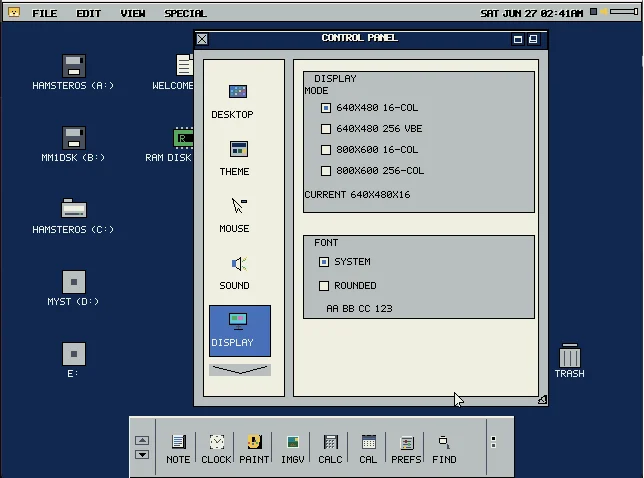
Targeting 386 and 486 era PCs, HamsterOS provides a user-friendly interface that includes essential utilities like a notepad, image viewer, calculator, and file finder, all packaged within an intuitive window manager. Users can operate up to five browser windows simultaneously, complete with dedicated icons for different file types. This kind of multitasking might seem limited by today’s standards, but it echoes the era's preoccupations with efficiency and simplicity, which many users find refreshing.
Each utility serves not just a practical purpose but also channels the aesthetics of the past, featuring chunky icons and a color palette that would feel right at home on screens from decades ago. For those who’ve longed to replicate or reminisce about their early computing days, HamsterOS positions itself as a functional time capsule. And yet, while it embraces nostalgia, the functionality is designed for actual use, not just ornamental. This is significant; it allows users to revisit their past without sacrificing usability.
Advanced Technical Specifications
One of HamsterOS’s standout features is its in-kernel VM86 DOS box, facilitating compatibility for older software, along with a FreeDOS fallback for those applications that need a little extra support. It features compatibility with FAT 12/16/32 file systems, ensuring reliable read-back verification and includes handy tools for managing partitions, formatting disks, and even SCSI diagnostics. The graphical output defaults to a 16-color VGA resolution, though it can switch to a 256-color mode for diagnostic purposes. This kind of flexibility speaks to the versatility that many vintage computing enthusiasts crave, allowing them to customize their experience for both gaming and productivity tasks.
Additionally, a safety mode kicks in if the system fails three times, returning the display to a basic VGA output. This safeguard indicates a thoughtful approach to user experience, as it prevents complete system lock-ups that were common in older systems, offering a layer of reliability that users can appreciate. Being able to troubleshoot basic issues without falling into total system chaos could make or break user engagement with retro platforms.
Compatibility and Performance
Mean Hamster, the creator of HamsterOS, appears to prioritize practical usage, evident from its integration with the HamsterWeazle floppy image management utility, aimed at users with older drives. The OS supports hardware typical of the 1980s and 90s, including ATA IDE, CD-ROMs, ISA floppies, serial connections, and PS/2 devices — adding support for mouse wheel functionality. While the only officially supported sound card is the Sound Blaster 16, user-configurable drivers may extend this compatibility. This focus on historical relevance is noteworthy; it acknowledges the legacy of technology that paved the way for today’s devices.
Its multitasking is based on a cooperative model, where each application takes its turn to run, contrasting with modern preemptive systems. This traditional approach can enhance performance on slower machines by managing memory and resource usage more effectively, although it comes with its drawbacks. Users familiar with rapid multitasking on modern systems may need to adjust their expectations, as efficiency might be traded for simplicity. An intriguing feature is I/O stall detection, which helps maintain system stability by identifying any hardware hiccups after an 8-second delay. This sort of proactive monitoring is a feature often overlooked in vintage systems, yet it's essential for maintaining a pleasurable user experience in a nostalgic environment.
Development Status and Outlook
Mean Hamster asserts that HamsterOS is beyond basic functionality, with a majority of its features already operational. The current development phase seems focused on improving stability and performance, with a clear intent to address any bugs that arise. This proactive development strategy distinguishes HamsterOS from many garage-developed projects that often stall after their initial release. The assurance that the software is not just a one-off but an ongoing project signifies a potential increase in user engagement and satisfaction.
Notably, HamsterOS is branded as a product, suggesting a commercial model, distinguishing it from many community-driven projects. For enthusiasts of retro computing, this could represent a worthwhile investment in functionality and nostalgia. It raises questions about how the retro computing market is evolving: Are users willing to pay for such software, and what does that point to regarding their values in a tech-saturated world? If you're working in this space, keep an eye on user responses to HamsterOS, as it may set a precedent for other retro-focused projects.
Future Implications for Retro Computing
The impact of solutions like HamsterOS could change how we view and interact with retro computing technology. As nostalgia continues to fuel interest, the future may see more developers stepping into this niche. The significance seems clear: if the path is paved for commercial retro software, we're likely to see more polished, user-friendly applications aimed at both nostalgia and practical usage. This could even extend to hardware emulation, where retro values fuse with modern advancements, potentially leading to an interesting revival of vintage computing culture.
At the same time, existing projects may reevaluate their models in light of a commercial competitor like HamsterOS. Competition often breeds innovation; maybe we’ll see a new wave of improved retro systems, directly benefiting enthusiasts. Indeed, this topic deserves more than just a passing glance—it's shaping up to be a fascinating intersection of commerce, technology, and nostalgia.