Google Enhances Transparency in AI-Created Ads with New Disclosure Labels
Google is taking significant steps towards enhancing transparency in advertising with the introduction of AI labels. These labels will help users identify ads that have been created or modified using artificial intelligence across Google Search, YouTube, and Discover platforms.
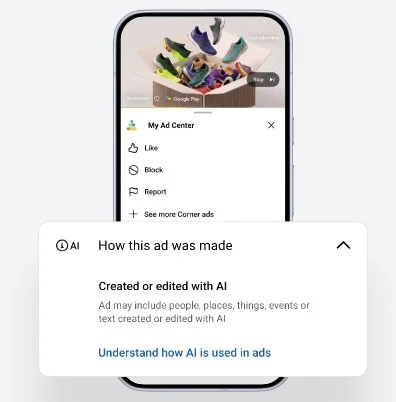
In a recent blog post, Google outlined how the new “Created or edited with AI” labels will be integrated into My Ad Center. Users can view this information by selecting the three-dot menu or info icon on an ad to access the “How this ad was made” section, which clarifies the involvement of AI in ad creation. This rollout is occurring globally, marking a notable shift towards promoting transparency in the ad ecosystem.
Labeling Mechanics and Third-Party Responsibilities
The implementation of these labels varies depending on the origin of the content. When advertisers utilize Google’s generative AI tools, the labels are automatically applied. This built-in functionality enables a straightforward identification process, helping to establish a baseline of accountability within Google's ecosystem. However, a different challenge arises for advertisers who employ third-party AI solutions. They must self-report their use of AI technology, which means they are responsible for manually adding the appropriate disclosures. The potential for inconsistency is significant; if these advertisers don't comply, consumers might receive misleading information about the nature of the ads they're encountering.
In some regions, third-party labels may even appear directly on the ads, emphasizing the need for accountability among advertisers. But here's the thing: this reliance on self-reporting puts the onus on the advertisers, which could open the door for some to take liberties with the truth. With the landscape of online advertising already rife with deception, this aspect of the labeling system could prove murky at best.
The Importance of Transparency
The drive for transparency comes at a pivotal moment. As AI-generated content continues to permeate various sectors of digital advertising, the need for clear labeling has never been more pronounced. Misleading ads can easily slip through the cracks, and consumers are often left in the dark about the true origins of the content they’re engaging with. By introducing these labels, Google presents users with an opportunity to make more informed choices, disrupting the cycle of passive consumption that characterizes much of online advertising.
While the addition of these labels is a step in the right direction, the positioning of the disclosures can feel inadequate, as they are not immediately visible and rely on the honesty of advertisers. Given the internet’s reputation for misinformation, making these disclosures more accessible would further enhance user trust. With more accessible information, users may feel empowered to scrutinize the ads they encounter rather than simply accepting them at face value.
Future Implications for Advertisers
Google's commitment to transparency reflects its broader advertising policies, which already require disclosures for digitally altered political ads. This expansion aligns with ongoing industry trends towards greater accountability, whether marketers like it or not. By implementing a labeling system for AI-generated content, Google is essentially setting a precedent that may influence other platforms to adopt similar measures. And yet, while this new labeling system enhances the framework for identifying AI-generated materials, its efficacy hinges on advertisers' willingness to be transparent about their tools.
There's a notable gap in the system’s ability to catch those who may exploit it. Without stringent enforcement mechanisms, there's potential for advertisers to sidestep the rules while maintaining the facade of compliance. If you're working in this space, you might find that the effectiveness of these labels is largely dependent on Google's investment in tighter detection technologies in the future. Without such advancements, the risk of misleading advertisements remains a significant concern that could undermine the consumer trust Google aims to build.
Looking Ahead: Implications for the Digital Advertising Ecosystem
The implications of these changes extend beyond Google. They set a tone for the entire digital advertising ecosystem. As companies face increasing scrutiny regarding ethical practices, the demand for transparency will likely grow stronger. The fear of public backlash against misleading advertisements might compel brands to adopt more rigorous standards. And while some advertisers will undoubtedly resist this change, hoping to maximize engagement through manipulative semantics, others will likely embrace it as a way to build credibility and strengthen brand loyalty.
For consumers, this development provides a mechanism to discern the trustworthiness of advertisements better. It'll compel advertisers to reconsider their strategies and be more forthright. In this ongoing debate about digital ethics, how Google navigates this terrain will be watched closely by industry insiders and consumers alike. The move to incorporate AI transparency could mark a significant shift in how advertisements are perceived, challenging the status quo of digital interactions.