Samsung Sound App to Sunset, Features Transitioning to SmartThings
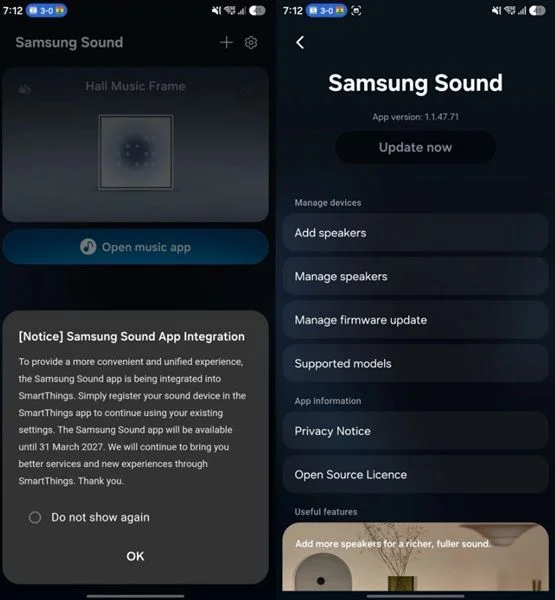
Samsung's strategy of streamlining its app ecosystem takes another step forward with the announcement of the impending shutdown of the Samsung Sound app by March 31, 2027. Users have begun receiving notifications indicating that to create a "more convenient and unified experience," the Sound app will cease operation, but its key functionalities will be migrated to SmartThings, Samsung's central hub for device management.
Launched earlier this year, the Sound app provided users with a convenient way to manage Samsung's soundbars and wireless speakers. As the shutdown date approaches, Samsung has made it clear how users can transition their settings: "Simply register your sound device in the SmartThings app to continue using your existing settings." Though this transition period extends for several months, it's wise for users to prepare ahead.
This move is part of a larger pattern of app retirements from Samsung that started in 2026, including the closure of popular applications like Messages and Quick Measure. Each of these app shutdowns seemingly aims at consolidating resources and improving user experience. For example, in July 2026, the Samsung Messages app was replaced for most users with Google Messages, although users on Android 11 or earlier were unaffected. The transition was designed to be as smooth as possible.
In September, Samsung announced even more app closures, including Quick Measure and AR Doodle, stating a commitment to reintroducing these services with enhanced features in the future. There's an expectation that as these applications are retired, certain elements will find new life within other platforms, much like the transition of Sound app features into SmartThings.
Shutting Down History
Analysis of App Retirements
This series of app closures seems to reflect Samsung's ongoing effort to streamline its offerings. While these applications might not have amassed large user bases, they served specific functions that users relied on. The challenges here are significant. By integrating features into existing platforms, Samsung is working to maintain user engagement while simplifying its app ecosystem.
You could argue that this is a strategic recalibration intended to shift focus towards their more successful services. The approach can be seen as proactive, potentially breathing new life into beloved features, though the transition may come with initial inconvenience for users. If you're working in this space, consider how such migrations can affect customer loyalty and satisfaction. Users have built habits around specific apps, and abrupt changes can lead to frustration.
Looking at the past, Samsung hasn't shied away from removing less popular features when they don’t serve the greater vision of their product ecosystem. The decision to replace the Samsung Messages app with Google Messages last year is a prime example. Google’s platform offers broader compatibility and greater functionality, indicating an inclination toward partnerships that allow Samsung to play to its strengths without bearing all development costs.
What's Next for SmartThings?
With the Sound app transitioning to SmartThings, Samsung aims to bolster the platform's utility. SmartThings has been the centerpiece of Samsung's approach to smart home integration. By migrating sound management to this platform, Samsung can enhance its appeal as a central hub for users looking to control multiple devices seamlessly. However, that’s only effective if the user experience is kept at a high standard. Will the integration maintain the simplicity that the standalone Sound app provided? That’s the key question.
Enhancing SmartThings with former Sound app functionalities could offer an all-in-one solution that aligns with the contemporary consumer's desire for unified control systems. For users, this could be a more beneficial framework than juggling multiple apps. But here's the thing: existing users may be attached to the familiar environment of the Sound app, leading to possible resistance against the shift. Samsung needs to tread carefully here.
Implications and Future Outlook
As Samsung continues this trend of app retirements, the implications stretch beyond just user convenience. It indicates a strategic consolidation that many companies struggle with. Samsung seems to be positioning itself in a way that reduces fragmentation within its ecosystem. This often leads to more harmony between devices, which can be a compelling selling point for potential customers. Consumers have become increasingly discerning, and they often seek out brands that provide a cohesive user experience across various devices.
(p>However, one must also consider that removing beloved features can alienate a segment of existing users. The Sound app may not have been the cornerstone of Samsung’s offerings, but its removal signifies a willingness to change. It’s a gamble: will users embrace SmartThings integration, or will they feel that essential features are being phased out? Simultaneously, Samsung will need to ensure that as they retire apps, they can effectively communicate the benefits of these changes without losing the essence of what made those apps valuable in the first place.In the end, as Samsung navigates these transitions, the company needs to remain attentive to user feedback. Each change should ideally enhance the experience instead of complicating it. As more elements are funneled into SmartThings, Samsung’s next moves could either fortify its ecosystem or risk losing users to competitors who don’t force such transitions. The stakes are high, and Samsung is at a pivotal crossroads.