Google's NotebookLM Transforms Research into Engaging 60-Second Videos
Navigating through piles of notes or extensive research papers isn’t a favorite task for many, and Google understands that. To streamline information consumption, it's enhancing NotebookLM, allowing users to transform uploaded documents into quick, TikTok-like videos, each lasting just 60 seconds.
Evolution of NotebookLM
Originally designed as a straightforward AI research assistant, NotebookLM has evolved into a sophisticated educational tool that caters to the needs of today’s information overload. The latest feature, called Short Video Overviews, builds on the previously introduced Cinematic Video Overviews, reflecting a trend where educational resources increasingly favor multimedia formats over traditional reading. Central to this upgrade is the advanced image generation model known as Gemini 3.1 Flash-Lite Image, or Nano Banana 2 Lite.
Advanced Image Generation
This new model stands out as Google’s quickest and most economical image generator, achieving impressive four-second image production times and marking a significant upgrade in visual quality compared to its predecessor, Gemini 2.5 Flash Image. It employs a blend of extensive knowledge and remarkable consistency in character representation, a feature that’s critical when aiming for clarity in education. This enhancement means users can efficiently create scenes, storyboard concepts, and produce clear typography for localized applications without sacrificing visual integrity. This increased visual quality might seem like a small detail, but it can make a big difference in how effectively information is conveyed.
Short Video Overviews
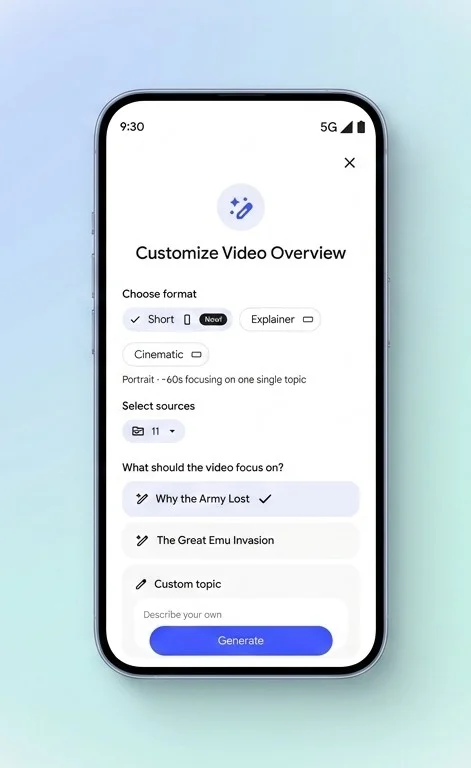
Leveraging Short Video Overviews in NotebookLM activates this powerful model to compress your sources into a vertical format filled with narrative insights and educational visuals. It's particularly tailored for those reviewing information from notes, presentations, or substantial PDF documents, focusing on essential points. Users select "Short" among various output options—along with Explainer and Cinematic formats—choose their sources, and direct the video's central theme using either a custom prompt or available suggestions. This flexibility not only saves time but allows users to customize their learning experience, something that traditional reading simply can’t compete with.
Public Preview of Gemini Omni Flash
In tandem with this, Google is making the Gemini Omni Flash open for public preview, aimed at generating complete videos. This model features natural language capabilities for editing, like adjusting scenes and changing characters, along with support for multiple input types. Audio synchronization complements each output, pairing spoken elements with energetic text animations. This integration not only enhances engagement but can potentially provide a more comprehensive comprehension of complex topics. The shift toward video-driven content is a reflection of changing media consumption habits that prioritize shorter, more digestible formats for learning and information sharing.
Accessibility and Rollout Plan
Short Video Overviews won’t be universally accessible immediately. The feature will begin its rollout in stages over the upcoming weeks, targeting English-speaking individuals over 18. This restricted launch raises several questions about inclusivity—will non-English speakers or those under 18 be left behind as educational tools increasingly pivot towards more visual and less textual content? Once it launches, users can utilize it via web, Android, and iOS platforms, whether they log in with a standard consumer profile or Google Workspace account. This broad reach is significant but also prompts further scrutiny into how such features can enhance (or hinder) learning across different demographics.
Industry Perspective
This shift is a notable win for students preparing for exams or professionals confronted with dense reports; condensing a lengthy, 50-page PDF into an engaging, brief video is a substantial advantage. However, one must consider: have we become so disinclined to read that we rely on AI to fabricate quick video summaries from our documents? Google frames this as a productivity tool, yet it raises questions about whether it's merely feeding into our diminishing attention spans. There’s always a concern that video could oversimplify complex topics, stripping away necessary details that foster deeper understanding. (And this is the part most people overlook.)
Implications and Future Outlook
This emphasis on brevity and video could indicate a tipping point in how educational content is consumed, suggesting a potential shift in literacy practices. If you’re working in this space, it’s essential to understand that as platforms evolve, the demand for quick, audiovisual summaries may detract from traditional literacy skills. While these innovations may lead to greater accessibility to information, there’s a real risk that nuanced understanding takes a backseat to mere consumption. What this means for you is that staying informed and capable of engaging with complex texts remains vital in a world increasingly enamored with speed and visual simplicity. The conversation about how we learn is just beginning.