Ring Robotics Brings a Rolling Rover and a Flying Drone Cam to the Home
Amazon's Ring Robotics is the first serious attempt to make home security something that moves. Its debut brings two products, a ground robot and a flying camera, both built to reach places a fixed lens can't. Ring founder and chief inventor Jamie Siminoff framed the idea around what users asked for: eyes in spots a fixed camera couldn't cover, and peace of mind in places they'd never want a camera at all. His answer to the obvious follow-up was blunt. "The honest answer wasn't more cameras; it meant reimagining what a security device could be."
That quote is more revealing than it looks. It concedes that the old model, adding lenses until the gaps closed, had run out of road. Fixed cameras see what's in front of them and nothing else, so every blind spot means more hardware, more wiring, and more installation decisions. Ring is betting that a device that moves can cover more ground with less equipment, and that's a reasonable bet on paper.
The Rover works the ground floor
The Ring Rover Cam is an automated robot that runs regular sweeps of a space. Amazon is pitching it more at businesses, such as office floors and large warehouses, than at households. If you remember the Ring Astro, the Rover is in the same family of ideas, but aimed at a more demanding job. Once it receives its orders and reaches the target area, it performs a 360° scan of the surroundings.
Ground robots in security aren't a new concept, but the pitch has usually leaned on novelty. Ring's framing is narrower and, I think, smarter. It treats the Rover as a patrol method for spaces where people already expect routine checks, like a warehouse aisle or an empty office at night. You're not buying a gadget to roam your living room. You're buying a walker that never gets tired and never skips the back corridor.
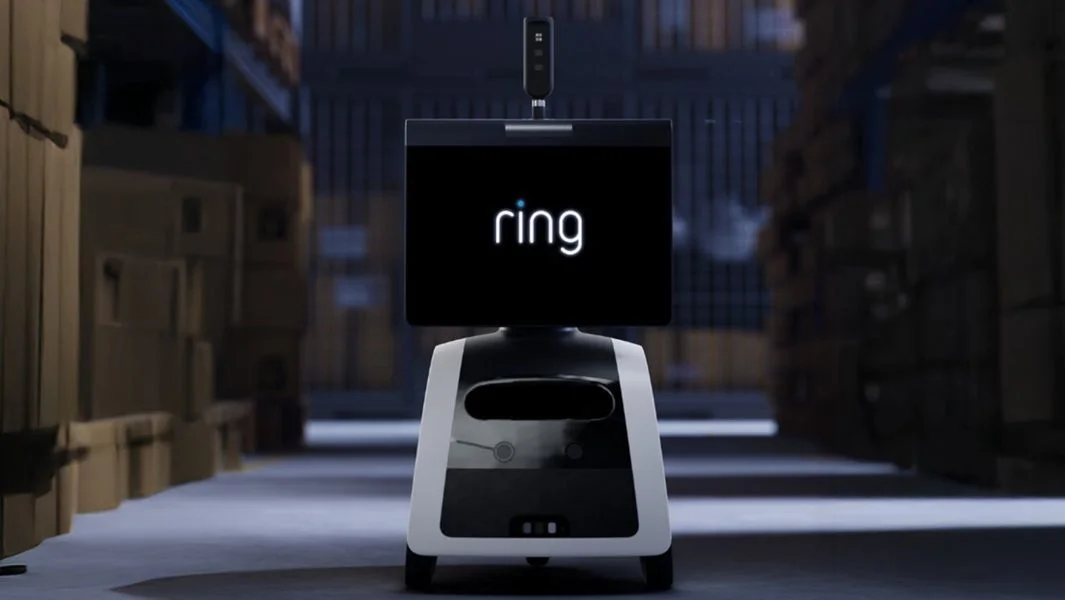
The Rover's real value comes from its integration. It connects with other Ring hardware, including doorbells and cameras. When one of those devices flags a disturbance, the robot goes to investigate on your behalf. (And this is the part most people overlook.) A patrol that never gets triggered is just a scheduled walk, so the robot's usefulness depends almost entirely on the sensors around it. A periscope camera raises and lowers to suit the location, and constant 4K streaming keeps the feed sharp. The unit also carries a built-in siren and a light tower.
Amazon lists the Rover Cam for pre-order at $999, with U.S. shipping beginning December 16. That's a serious price for a device that will spend its days patrolling someone else's floor plan. Before recommending it to anyone, I'd want to see how the siren and light tower behave in a real facility, because a deterrent that annoys staff or triggers false alarms can quietly stop being useful. If you're budgeting for something like this, the price and date give you a clear decision window.
The Drone Cam takes the overhead view
The Ring Drone Cam recalls Ring's Always Home Cam from 2021, but the new design looks far more current. Amazon says the drone "gives you whole-home visibility without the need to mount a camera in every room." That's the pitch in one line. AI is built directly into the device, and it plugs into the same Ring ecosystem as the rest of the lineup.
Comparing the drone to its predecessor shows what actually changed. The earlier concept was about adding indoor sensing to a home. This one is about moving that sensing through the space on demand. That's a bigger shift than the design refresh suggests, and it's the reason the product deserves more attention than a typical hardware update.
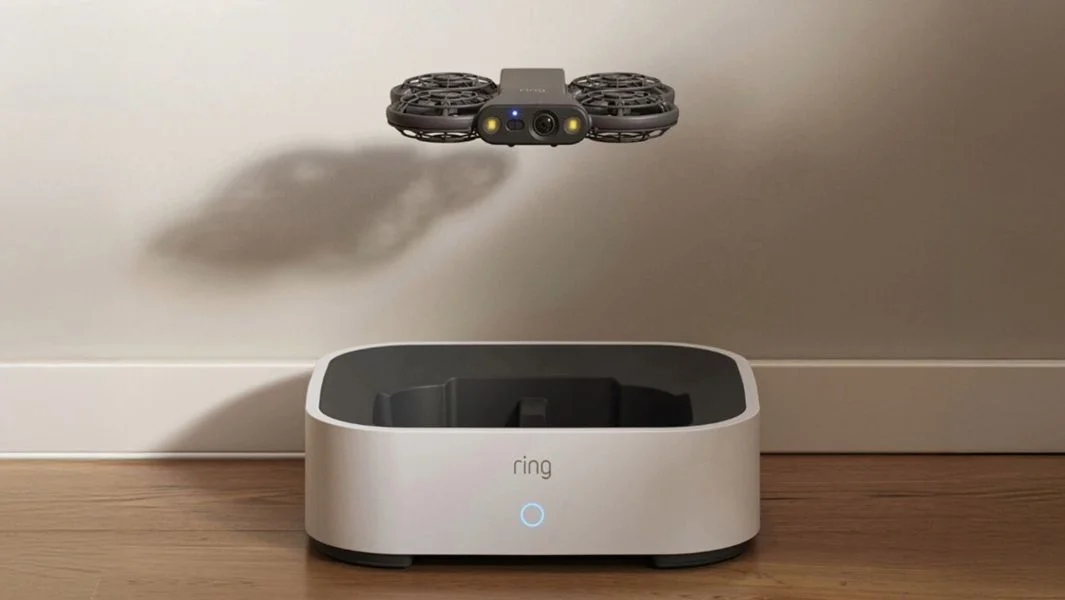
Like the Rover, the drone runs on preset flight routes. It can fly those routes automatically on a schedule, or you can launch it manually whenever you want. The camera offers a 148-degree field of view and 360-degree rotation at 2K resolution. Detections from other Ring devices trigger an investigation, and the drone reports back through the app.
The spec sheet is modest by current camera standards, and that's fine. The value here is placement, not pixel count. A drone can look down a hallway or across a room from a height that a wall-mounted lens would never reach, and for a lot of homes that's the blind spot that matters. Resolution will matter less than whether the device gets to the right spot at the right time.
Amazon also included a caveat that buyers should read closely. The company says the device "has not been authorized as required by the rules of the Federal Communications Commission." That likely explains why Amazon is currently directing interested customers to sign up for notifications rather than offering a pre-order. The Drone Cam is listed at $249.
This is the kind of detail that gets lost in launch coverage. A listed product that isn't yet authorized is a different thing from one ready to ship, and the notification sign-up is the more honest way to handle it. I won't guess at when authorization might come, and the material here doesn't offer a timeline. If you're planning around the drone, treat its availability as open until Amazon says otherwise.
Mobile cameras raise the privacy question
Cameras that fly and roll through your home are an obvious source of unease, and Amazon knows it. The company says both devices shut their cameras off when powered down or idle. The drone's camera goes fully dark, while the Rover retracts its lens and disables its microphone. When either device is active, LED indicators show it, and the Rover displays its status on screen. Amazon also says footage is protected with TAKE security encryption.
Privacy worries about home cameras aren't new, but mobility changes the shape of the problem. A fixed camera sits in one known place, so you can audit it once and move on. A device that travels can end up in rooms you didn't plan for, at times you didn't pick, and that's a different kind of trust to extend. Every route becomes a policy question, not just a placement one.
Those defaults answer the first-order worries. The harder question is whether they hold up in everyday use, with pets, kids, and a few dozen scheduled sweeps a week. That's where these products will earn or lose trust. Defaults are a starting point, though. Whether the lens really retracts, whether the microphone really stays off, and whether the LED indicator appears in every mode are things you'll only confirm with hands-on time.
My read is that the hardware concept is sound, and the real test will be how reliably the privacy behavior works in lived-in homes.
What this means for the category
If you're working in this space, the interesting part isn't the robot or the drone on its own. It's the idea that security coverage can be delivered as a moving service rather than a fixed installation. That shift changes the economics of coverage, and it changes what buyers will compare. A fixed camera competes on resolution and price. A patrolling device competes on route logic, responsiveness, and how well it talks to the rest of the system.
That said, the category has a history of promising more than it delivers when the hardware leaves the demo room. Obstacles, lighting, clutter, and network quirks tend to show up after launch, not during a keynote. Ring's integration story is its strongest argument, and it's also the thing most likely to break when a dozen devices have to agree on what counts as a disturbance. Here's the thing: a robot that investigates false alarms all day is a costly way to learn that your sensors are too sensitive.
What this means for you depends on where you sit. If you manage a facility, the Rover is the product to watch, and you should ask how it handles after-hours patrols and what happens when staff are in the same spaces. If you're a homeowner, the drone is the more relevant pitch, and the privacy behavior matters more than the spec sheet. Either way, the questions that count are the ones Amazon hasn't fully answered yet, and that's the right place to start.