Motorola Signature 27 Brings a 200MP Periscope Camera and 7,000mAh Battery
Motorola’s Signature 27 makes its premium case through a mix of high-end imaging, a very bright display and long software support. The $1,599 phone arrives November 26, with a 200MP periscope camera and a 7,000mAh battery among its headline specs. Those are big claims on paper, and they point to a phone designed to compete on features that are easy to explain: reach, endurance and longevity. The harder question is how much of that promise will matter in everyday use, where camera processing, heat and software quality count as much as the component list.
A camera system built around reach
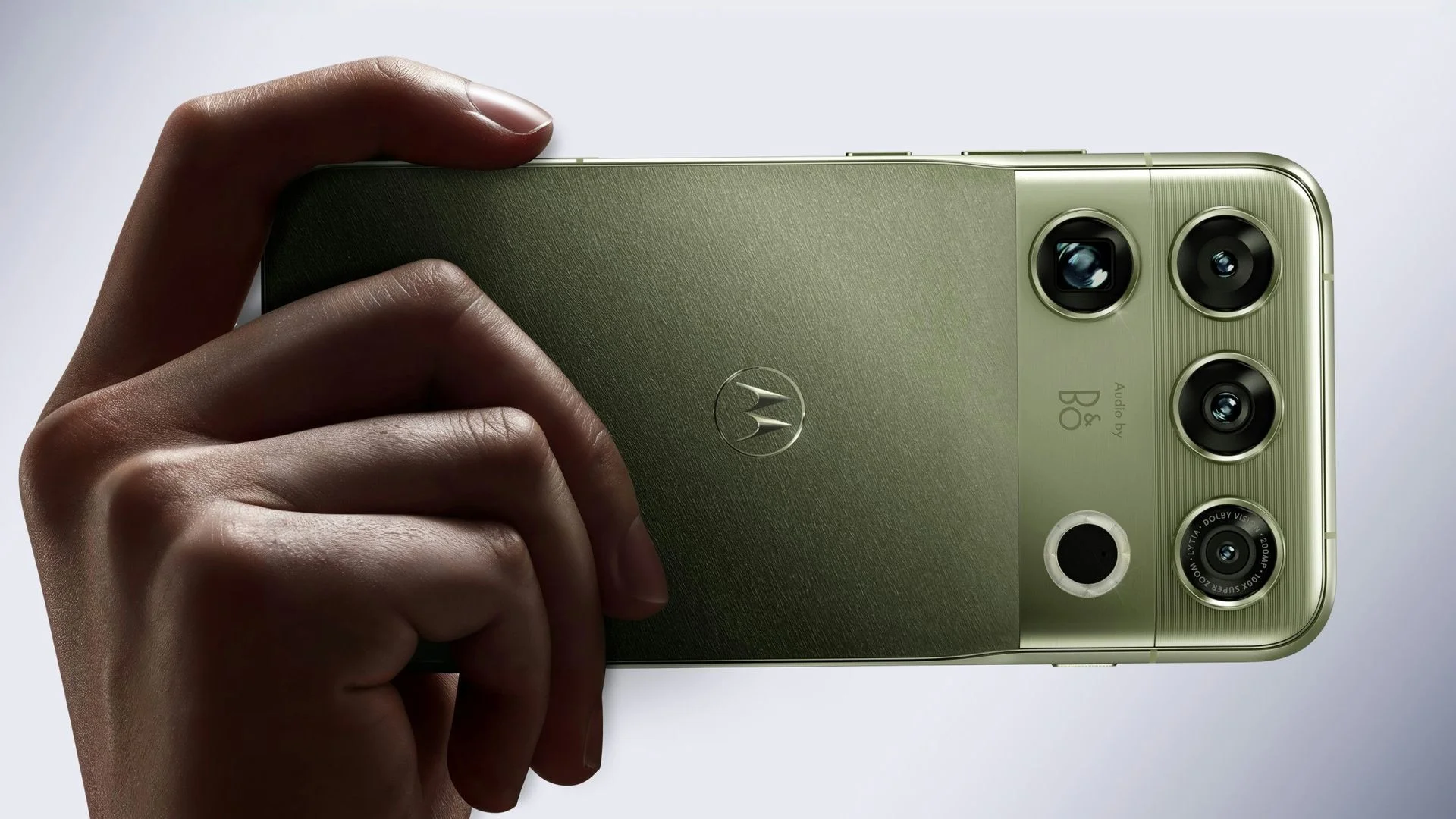
The camera setup is the clearest point of distinction. Motorola calls it the company’s “best ever”: a 50MP Sony LYTIA L910 main camera sits alongside a 200MP periscope telephoto offering AI-powered zoom up to 100x. The company says the processing is designed to retain color, sharpness and detail at long range. Zoom options run from 1x through 50x before reaching 100x, a range that gives users many steps between a standard view and the most extreme crop.
That reach is the headline, but the stated zoom limit shouldn’t be read as a guarantee that every image at 100x will look clean. Digital and computational zoom systems typically trade detail for framing as magnification rises, and the result depends on light, movement and processing. Motorola’s description sets out what the software is meant to do; hands-on results will show how well it does it. This is more significant than it looks: a high maximum zoom is easy to advertise, while consistent color and usable detail across the range are harder to deliver.
A 50MP ultrawide and 50MP front camera round out the system. Motorola has also added a dedicated EVS action sensor, which it says improves capture of moving subjects. Paired with Action Shot, the sensor is intended to freeze motion with greater clarity. That could be useful for people photographing children, pets or sports, where a brief delay can mean missing the moment. But a dedicated sensor is only one part of the equation; timing, autofocus and image processing all affect whether the shot comes out as intended.

Display and cooling for sustained use
The 6.8-inch Extreme AMOLED Duo display reaches a claimed peak brightness of 12,000 nits. Motorola says the panel is 34% more efficient and delivers what it describes as “exceptional sharpness, contrast and precision.” A peak figure can indicate headroom for bright conditions, but it doesn’t tell you how often the screen reaches that level or how it behaves during ordinary use. Those figures point to a screen designed for visibility and extended use, though real-world performance will depend on conditions and workloads.
Motorola is also using Qualcomm’s Snapdragon 8 Elite Extreme Gen 6, a first for the company. Its ArcticMesh cooling system is about 40% larger than before, according to Motorola, with the aim of managing heat during gaming and other demanding sessions. A larger cooling system may help a phone sustain demanding work for longer, but the announcement doesn’t establish how much performance it can maintain or how warm the device gets in practice. The processor and cooling system are therefore part of the same pitch: speed matters, but sustained speed matters more when a session lasts beyond a brief benchmark.
That distinction affects more than gaming. Camera processing, bright-screen use and other demanding tasks can all add to a phone’s workload. If you’re working in this space, the useful question is whether the phone stays comfortable and responsive through those tasks, not simply whether the components sound powerful. We’ll need everyday use to answer that.
Long support and a focus on privacy
The Signature 27 is set to receive seven years of OS upgrades. That commitment gives buyers a longer stated support window than a short upgrade cycle would, and it can make a premium purchase easier to justify over time. Still, the length of support is only one measure of its value: the details of delivery and the usefulness of updates matter too. Motorola has made a clear promise here, but the announcement doesn’t describe how every future update will arrive.
Google’s Gemini Intelligence will power a range of AI features, including Rambler. That puts software features alongside camera hardware in the phone’s sales case, though the announcement doesn’t explain Rambler in enough detail to assess its day-to-day usefulness. AI labels can cover very different functions, so the practical value will depend on what the features do and how well they fit into routine tasks.
Motorola also says the phone fully supports GrapheneOS, and that it worked with the GrapheneOS Foundation to meet the project’s hardware requirements. The company says it will share more details later. That’s a notable claim for a phone positioned around both premium features and privacy, but the wording leaves important questions open until those details arrive. Support for a privacy-focused operating system could matter to a narrower group of buyers than the camera or battery; for them, the hardware relationship may be a central reason to pay attention.
Premium hardware, premium price
Audio tuning comes from Bang & Olufsen, part of a multi-year partnership. The phone also has a 7,000mAh battery with 90W wired charging, a military-grade aluminum frame rated MIL-STD-810H, and IP68 and IP69 ratings. Taken together, those details suggest Motorola wants the Signature 27 to feel like a complete flagship, with audio, battery and durability claims supporting the more visible camera and display features.
The battery capacity is substantial on paper, while 90W charging points to faster wired top-ups. Neither specification tells the whole story: battery life depends on how the screen, camera and processor are used, and charging speed is only one part of the ownership experience. The durability ratings likewise describe tested resistance categories, not a promise that a phone can’t be damaged. The numbers here are underwhelming as evidence of daily performance; they’re useful specifications, but they still need real-world context.
Motorola announced the Signature 27 on Thursday morning, November 5. It goes on sale November 26 for $1,599 in PANTONE Coal Smoke and Capulent Olive. The specifications make a strong pitch for users who prioritize camera reach, battery capacity and long-term software support; the price will put the focus on how well those features hold up in everyday use. At this cost, a collection of impressive headline claims isn’t enough by itself. Buyers will want the camera to produce dependable results, the battery to match their routine and the software commitments to feel meaningful over time.
What the specifications need to prove
The Signature 27’s strongest case is its combination of features, rather than any single component. Long zoom, a large battery, a bright display and extended OS support each address a different buyer concern. That breadth could make the phone appealing to people who don’t want to choose between imaging and endurance. And yet, a long spec sheet can’t settle the questions that matter most after purchase.
Motorola’s claims give shoppers a useful starting point, but several of the most important ones are still promises about performance: detail at extreme zoom, cooling under sustained load, and the practical value of its AI and GrapheneOS support. (And this is the part most people overlook.) A phone can lead with remarkable numbers and still be judged by the ordinary moments between them: whether a moving subject stays sharp, whether the screen remains easy to see outdoors, and whether the battery makes it through a full day of the owner’s actual use.
For now, the Signature 27 is a premium proposition with a clear set of priorities. The launch details make it easy to see what Motorola wants buyers to notice. The everyday verdict will depend on whether those features work together as well as the announcement suggests. On paper, at least.